Check out some books by your tutor Fiona Veitch Smith … (click on the book covers to find out more)
 Hello everyone, welcome to the first session of our free online creative writing course. Over the next eight sessions we will be looking at different aspects of creative writing and trying our hand at various forms. I’d strongly encourage you to have a go at the exercises along the way, and please feel free to leave comments or ask questions at the end. If you have arrived on this page without first reading the home page and frequently asked questions page (on tab above) please go back and do so now. If you have read them, enjoy the course!
Creativity and Art
What is creativity? The Collins dictionary defines it as ‘the ability to cause something to exist’. Without getting into too much of an existential discussion, I would say that with every thought that is expressed, something has been created. It was Descartes who said: ‘I think, therefore I am’; well I would add, ‘I think, therefore I create’ (do you feel a God complex coming on?). But how do we express our thoughts? Sometimes we do it verbally, other times by body language and still again through what is loosely termed ‘art’.
Art takes place when a thought is expressed and fixed in a way that other people may experience it on an aesthetic level – through music, writing, painting, sculpture, choreography and so on. Many artists say that their best work takes place when they ‘by-pass’ the thought and simply express the feeling. This may be true, but for writers, who use a verbal medium, a feeling must first be converted into a thought before it can be put into words. Don’t over analyse the thought before you express it, as this way you can ‘channel’ the purest interpretation of the feeling, but some cognitive process needs to take place. Some writers prefer to mull over a thought and give it form before they put pen to paper – I’m one of them – but it’s good practice to try and switch off the ‘editor’ at least for the first draft. First response trigger exercises are useful in this regard and can release some unexpected words and images.
Exercise 1:
Write down your first response to these words or phrases:
- Blue ball
- And that’s when the sadness came
- Coffee
The first task of a good writer is to convert feelings into thoughts and then into words. This is the raw material that can then be converted into something more permanent. Some writers refuse to toy with their first drafts, believing their creativity will be diluted; I disagree. Allowing your critical mind to improve a piece of writing is where the craftsman meets the artist. Something produced only by the former will lack soul and something by the latter will lack form. Good writing is a combination of art and craft.
For public consumption
Art, of course, is highly subjective and one woman’s masterpiece is another woman’s unmade bed. We all have the ability to create, but whether or not our creation is ‘art’ must be left to the eye or ear of the beholder.
In this session we will look at how you can craft those creative thoughts into creative writing to share with other people. And that’s what sets ‘public’ writing apart from ‘private’ scribblings – there’s a perceived readership in mind. When I ramble on in my journal, I am the only one who will read it (hopefully!) so my only concern is getting my thoughts down on paper. The moment I want someone else to read it I begin to consider ways to improve the presentation and craft it into something more aesthetically pleasing. I consider which words may sound more colourful, whether or not my sentence structure is grammatically correct, whether I’m using evocative imagery, and so on.
Story, feeling or image?
What is it about those creative thoughts that you think might be of interest to other people? Do they speak of an eternal truth or a common experience? Do they make you laugh or cry? Do they suggest a story that will entertain or a poem that captures a moment that must be shared?
Exercise 2: In 50 words or less write down why you want to write then list three creative thoughts that you’ve had lately (each 10 words or less). These may be an image, a musing, a ‘truth’, a story, or so on. If you haven’t had any, take yourself for a walk and look around; what grabs your imagination? Browse through a newspaper or a magazine; do any stories or pictures catch your attention? Think back over your day; did anything funny, charming, shocking or unusual happen to you or someone you know?
Poetry or prose?
Some people are more suited to writing poetry than prose and some people do well at both. Although we won’t be discussing it in this course, other people are more suited to script. I’m one of them. I’ve had relative success as a prose writer and in fact have managed to earn a living from it, but it’s taken years of hard work to get to this point. I recently branched out into scriptwriting and found that I had much more of a natural ability. (If you’re interested in finding out more about scriptwriting, check out getting started in playwrighting). You may find that you’ve been trying to make it as a poet when actually you’re more suited to prose. Now I don’t want to pigeonhole anyone, but ask yourself the following questions:
- Are you more attracted to films than stills?
- Do you enjoy telling people ‘stories’ from your life?
- Do you prefer to read stories or poems?
If yes, to these, then you may be more suited to prose than poetry. If no, then the opposite may be true. If it’s ‘sometimes yes, sometimes no’ then perhaps you are suited to both. We shall be looking at how to write poems in more detail in session 7, but suffice to say, a poem is like a snapshot of a moment. If you can’t rest until you know what happened before and after, then prose may be your genre.
Exercise 3: Take one of the three creative thoughts you wrote down in Exercise 2, then list 20 separate words that communicate or describe that thought. Do not, at this stage, link the words into sentences. Once you have your 20 words use them in a poem of 16 lines or less. Then, take the same 20 words and work them into a short story of under 300 words. Which exercise came more easily? Which form has best communicated your creative thought?
Further Resources:
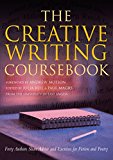
There are some excellent resources out there for creative writers. To get quick ‘starter’ images when your own well is dry I recommend The Writer’s Block by Jason Rekulak. I’m currently working through The Creative Writing Coursebook by Julia Bell and Paul Magrs and finding it very useful.
The next creative writing course session is how to write a short story. But before you move on to that, please feel free to leave a comment or ask a question in the box below.
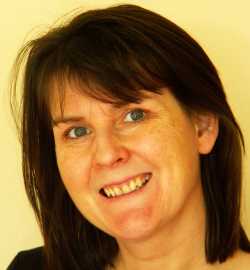 Welcome to The Crafty Writer's free online creative writing course, presented by Fiona Veitch Smith, a freelance journalist, editor, author, playwright, screenwriter and writing teacher. I hope that you'll see a dramatic improvement in the quality of your writing as you work through this course.
What a great way to get me out of this prison of procrastination! Thanks so much for doing this!
Happy to oblige, Michele
Found this very helpful and informative
Thanks
You’re welcome, Ray.
This is very informative, easy to read and understand. You are doing a great job. Thanks.
“one woman’s masterpiece is another woman’s unmade bed”- that makes a firm statement.
Also wanted to thank you for this helpful article
Hi Souptik, I was referring to the Tracy Emin Turner Prize winning art-work – Unmade Bed. Which is just that, an unmade bed! Glad you found something useful here.
Thank you Ms. Fiona for offering this course. I’m interested in honing my writing skills to turn them into a meaningful career God Willing. Your course is giving me an introduction into the beautiful world of writing. I’m most grateful.
Sincerely,
Sarah
You’re most welcome, Sarah. This must be one of the nicest ‘thankyous’ I’ve ever received. God bless you in your writing.
Really enjoyed this first session, and look forward to the rest to come. Thank you so much for making this course available for free. It really is a wonderful way to encourage us all to be more creative!
i really liked this, it was very helpful
I am an inveterate writer – of emails and letters etc and also my profrssional life is that of editing medical manuscripts in terms of language. So I write an awful lot and read an awful lot. Have always had the desire to be creative but one has to know how to go about it. The words that you proviude here ans ask us to think up of our associaitons and the small tasks you have set are surely the best wasy to begin to think differently – not always intellectually, as my profession requires, but maybe emotionally. I shall work through your course and I might be able to come up with good ideas for creative writing and maybe even actually produce a short story – which is what I really want to do.
best
rajam
was surprised at how easy it was to form a stoty.
i am really excited to go on to the next course i am learnin things already. i learned i am not a poet by no means thanks for giving me somewhere to start b4 i start paying!
love this free creative writing lesson, it really helped to release my creativity by writing freely and not thinking too hard.
I think this has help to write and to think about the way that i write. I never would have wrote a short story or poem before this. Thank you for your help . Also, I have purchased ‘The creative writing coursebook’ as you suggested.
I am going to take things step by step, thanks for your help again.
You’re welcome Roger. I hope you continue to enjoy the course.
hi, Just wanted to say that this information is very useful too me!!
So helpful and so interesting! I’m so happy to see it comes pretty easy to me. At least for short stories. And I really enjoyed the first exercise.
Hi Fiona,
I am an avid web surfer, and greatfully came across your website on creative writing. I want to commend you for offering a free creative writing course to all of us, ‘wannabe’ writers. Most professionals such as yourself, would usually want payment first. I’m a natural thinker and do a lot of that, thinking that is. I am also fond of reading and acquiring loads of different avenues of knowledge. Call me a ‘knowledge junkie’ if you wish! Well, I dont want to keep you, just wanted to thank you for taking the time to help the ‘needy’ in their time of need. I will now continue utilising this wonderful oppertunity (your free course, ofcourse) to hopefully learn something about creative writing and hone my skills, that is if I actually do posses any, in this field, at all!
Thank you!
You’re most welcome Joel. I’m sure you have some skill – you certainly have the passion! Happy writing.
Hi Fiona,
I want to thank you for allowing us to draw from your experience and wisdom.The exercises are great and looking forward to the rest of the course.
I would like to know what your fee is for professional critiquing. I did not see an amount under F.A.Q. If you could let me know I would appreciate it.
Thank you for making this short course free and I know everyone else is just as grateful as I am.
Deborah
Hello Deborah. Glad you’re enjoying the course. Regarding critiquing rates, it varies according to what you want done. There is a link to my rates on the FAQ page. But if you missed it, here it is again http://www.thecraftywriter.com/services/#critiquing
Thank you for the exercises. I wrote about a busy mother who drank black coffee because her four year old son had woke her up after a four night sleep. The boy tripped with the big blue ball and fell down the stairs. His mother took him to the hospital and when they asked her for her health care plan the sadness came to her. It was interesting. But I wasn’t sure if I understood the exercise because I was unclear. Did I have to create some small narrative or just write three sentences, I wasn’t sure. It took some time to do. But thanks, I really enjoyed it. Can’t wait to keep up writing.
Hello Kathie, there’s no right and wrong. This was simply an exercise to release something in you. If a sentence was released, that’s great, but if it led to something longer, that’s fine too. Happy writing!
I fear I’m not very creative. My blue ball was a blue medecine ball; my coffee was a cup of Folgers classic; and my sadness was a scene from the book “A Picture of Dorian Gray”. My three crative thoughts were all ones I had a while ago and probably weren’t original even then. They were “A woman named Evangeline is the angel of death”, the name “Ellia”, and the line “My tears will be your river crossing.”
Why isn’t that creative? All of those things could be the start of something. Simplicity is not a lack of creativity. You’re doing yourself in before you even start. Give yourself a good talking to!
I was thinking hard to write something about a ‘ blue ball’ , when my seven year old grand daughter brought a globe from school. She told me that she wanted to be a glob-trotter. I am sad that I dont have much time left to be one, and what else i can do other than muse on it over a cup of coffee!
Thank you, I am having fun and hope with your course!
I am not sure if you meant to write a whole paragraph or just write first few lines that come to the mind?
I wrote online few lines but I would like to know if you expect to write as longer as possible?What would be convenient?
Blue ball rhythmically swinging between puffy white clouds
thats when the sadness came stalking the whole of my body, slowing down my steps
grabbing my legs, paralysing my body, bringing me closer to death..
Coffee ..
vibrant fumes of Rumba and Mambo..
Thank you,
S.
Write as much as you like Satinka. This is for you. It’s simply an exercise to release your creativity. I don’t look at it.
Happy writing!
Fiona