Check out some books by your tutor Fiona Veitch Smith … (click on the book covers to find out more)
 Hello everyone, welcome to the first session of our free online creative writing course. Over the next eight sessions we will be looking at different aspects of creative writing and trying our hand at various forms. I’d strongly encourage you to have a go at the exercises along the way, and please feel free to leave comments or ask questions at the end. If you have arrived on this page without first reading the home page and frequently asked questions page (on tab above) please go back and do so now. If you have read them, enjoy the course!
Creativity and Art
What is creativity? The Collins dictionary defines it as ‘the ability to cause something to exist’. Without getting into too much of an existential discussion, I would say that with every thought that is expressed, something has been created. It was Descartes who said: ‘I think, therefore I am’; well I would add, ‘I think, therefore I create’ (do you feel a God complex coming on?). But how do we express our thoughts? Sometimes we do it verbally, other times by body language and still again through what is loosely termed ‘art’.
Art takes place when a thought is expressed and fixed in a way that other people may experience it on an aesthetic level – through music, writing, painting, sculpture, choreography and so on. Many artists say that their best work takes place when they ‘by-pass’ the thought and simply express the feeling. This may be true, but for writers, who use a verbal medium, a feeling must first be converted into a thought before it can be put into words. Don’t over analyse the thought before you express it, as this way you can ‘channel’ the purest interpretation of the feeling, but some cognitive process needs to take place. Some writers prefer to mull over a thought and give it form before they put pen to paper – I’m one of them – but it’s good practice to try and switch off the ‘editor’ at least for the first draft. First response trigger exercises are useful in this regard and can release some unexpected words and images.
Exercise 1:
Write down your first response to these words or phrases:
- Blue ball
- And that’s when the sadness came
- Coffee
The first task of a good writer is to convert feelings into thoughts and then into words. This is the raw material that can then be converted into something more permanent. Some writers refuse to toy with their first drafts, believing their creativity will be diluted; I disagree. Allowing your critical mind to improve a piece of writing is where the craftsman meets the artist. Something produced only by the former will lack soul and something by the latter will lack form. Good writing is a combination of art and craft.
For public consumption
Art, of course, is highly subjective and one woman’s masterpiece is another woman’s unmade bed. We all have the ability to create, but whether or not our creation is ‘art’ must be left to the eye or ear of the beholder.
In this session we will look at how you can craft those creative thoughts into creative writing to share with other people. And that’s what sets ‘public’ writing apart from ‘private’ scribblings – there’s a perceived readership in mind. When I ramble on in my journal, I am the only one who will read it (hopefully!) so my only concern is getting my thoughts down on paper. The moment I want someone else to read it I begin to consider ways to improve the presentation and craft it into something more aesthetically pleasing. I consider which words may sound more colourful, whether or not my sentence structure is grammatically correct, whether I’m using evocative imagery, and so on.
Story, feeling or image?
What is it about those creative thoughts that you think might be of interest to other people? Do they speak of an eternal truth or a common experience? Do they make you laugh or cry? Do they suggest a story that will entertain or a poem that captures a moment that must be shared?
Exercise 2: In 50 words or less write down why you want to write then list three creative thoughts that you’ve had lately (each 10 words or less). These may be an image, a musing, a ‘truth’, a story, or so on. If you haven’t had any, take yourself for a walk and look around; what grabs your imagination? Browse through a newspaper or a magazine; do any stories or pictures catch your attention? Think back over your day; did anything funny, charming, shocking or unusual happen to you or someone you know?
Poetry or prose?
Some people are more suited to writing poetry than prose and some people do well at both. Although we won’t be discussing it in this course, other people are more suited to script. I’m one of them. I’ve had relative success as a prose writer and in fact have managed to earn a living from it, but it’s taken years of hard work to get to this point. I recently branched out into scriptwriting and found that I had much more of a natural ability. (If you’re interested in finding out more about scriptwriting, check out getting started in playwrighting). You may find that you’ve been trying to make it as a poet when actually you’re more suited to prose. Now I don’t want to pigeonhole anyone, but ask yourself the following questions:
- Are you more attracted to films than stills?
- Do you enjoy telling people ‘stories’ from your life?
- Do you prefer to read stories or poems?
If yes, to these, then you may be more suited to prose than poetry. If no, then the opposite may be true. If it’s ‘sometimes yes, sometimes no’ then perhaps you are suited to both. We shall be looking at how to write poems in more detail in session 7, but suffice to say, a poem is like a snapshot of a moment. If you can’t rest until you know what happened before and after, then prose may be your genre.
Exercise 3: Take one of the three creative thoughts you wrote down in Exercise 2, then list 20 separate words that communicate or describe that thought. Do not, at this stage, link the words into sentences. Once you have your 20 words use them in a poem of 16 lines or less. Then, take the same 20 words and work them into a short story of under 300 words. Which exercise came more easily? Which form has best communicated your creative thought?
Further Resources:
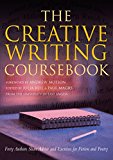
There are some excellent resources out there for creative writers. To get quick ‘starter’ images when your own well is dry I recommend The Writer’s Block by Jason Rekulak. I’m currently working through The Creative Writing Coursebook by Julia Bell and Paul Magrs and finding it very useful.
The next creative writing course session is how to write a short story. But before you move on to that, please feel free to leave a comment or ask a question in the box below.
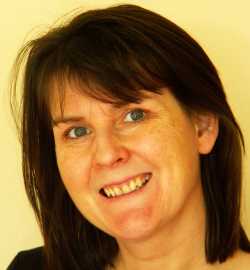 Welcome to The Crafty Writer's free online creative writing course, presented by Fiona Veitch Smith, a freelance journalist, editor, author, playwright, screenwriter and writing teacher. I hope that you'll see a dramatic improvement in the quality of your writing as you work through this course.
I am so thankful for the internet, because I wouldn’t be able to do this course without it.I have been thinking about writing for the most of my life, and this course and the internet is helping me accomplish my lifelong dream, I just hope I don’t suck at it! Thank you so much for supplying this course for free!
I think this is just so generous of you to provide this stimulus free of charge. It is instantly encouraging yet challenging,thought-provoking yet rewarding – and creative. I have completed the first exercise and look forward to continuing the journey. Thank you for the opportunity.
YOu’re welcome Barbara. Enjoy it.
I actually enjoyed doing these exercises. I plan to study writing whenever I go to college and I think this will prepare me. I also love that I can do it from the comfort of my home. I am looking forward to continuing on with this course.
I am really enjoying this so far. Looking forward to the next lesson. Thanks for making it free.
Hello and thank you. I will be sixty years old in a couple of months. I feel like I am just beginning. My creative juices are there, but I am so lacking in grammer and everything else that goes in with writing. Thank you for helping us tap in to some of our potential and believing that it is never to late to learn. I feel like I am just learning to crawl when writing. Again thank you for making this course free.
you’re welcome Gladys.
I have really enjoyed the first part of your course and look forward to more. Thank you.
i am a new budding author in the making at only 12 years old but i found this lesson very insight ful and i havent stopped thinking about what you have said, i found that i am much better at stories than poetry, something i was torn about, so thank you!
Thank you for providing the free lessons. It is valuable to receive guidance in the kraft of writing. Even when one is not shy of words, to learn to put them into something more than just private scibble is wonderful and challanging.
you’re most welcome, Maria.
I enjoyed this first lesson. I look forward to participating in the next one. I will be getting the book “The Creative Writing coursebook” by Julia Bell, that you recommended. Thank you.
I’m looking forward to reading further.
I’ve really enjoyed this first session, the exercises so far have been more helpful than i imagined! I’m looking forward to reading on…
Thank you so much for this course! I found the first exercise very thought provoking and practical. I’m ready for the next lesson!
you’re welcome Oscar. Hope you enjoy the rest of the course.
Hi Amor. If you’re interested in non-fiction writing you might want to have a look at my non-fiction course too. There’s a session in there on writing from life.
God bless you too!
Fiona
This first lesson has pulled so much out of me. This is rellay eciting!
Yes it’s very exciting when you discover what’s been bubbling up inside you for so long. Enjoy!
I enjoyed the first session. I am thinking I maybe more of a prose writer. I have enjoyed journaling for years and I now understand that what I journal is for no one else. Yet some of those thoughts I really want to share. My hope is to encourage someone through my writing as I encourage myself.
The exercises are helpful and things I have never done. I have never taken a writing course. I want to write so much so that it is as if my heart is boiling over, yet I have such fear. Anyway thanks for offering this free. I will be doing all eight sessions. I will get the book as well.
Thanks!! I had so much fun and learn some new skills!!
Tick Tock
With swollen digits keys are pressed to present a thought. Time is embraced.
Fiona,
It is the balance between classic forms and artistic endeavors that is unnerving
to me as a writer. Like playing a flute, the writer tries to breath life into the music of words
that so often sound shallow. Depth comes from years of experience, letting go while still holding on to the skill of creating a note.
They say “growing old is not for sissies…” but real agony, anguish and pain comes from writing.
Should we post the completed exercises?
That’s up to you Karen. I don’t give feedback but perhaps one of the other participants might want to. In fact it would be useful if they did. However, this will be a bonus as the exercises are designed to help you self-analyse your own work.
Thanks for offering this course for free…i come from a family where writing is not much encouraged. I know that I am not very good at writing but i want to write throughout my life…I am sure I will be benefited by this course…thanks once again…
You’re welcome Dharmista. Sometimes when your blood family can’t help there’s a wider family out in the world waiting to help you. Happy writing/
I just started!!! Thank you for offering this!!! I really, really, REALLY want to be a writer!!!

You’re welcome Stephanie. And remember: you already are a writer. A writer is someone who writes. But we can all strive to be better writers. Good luck.