Check out some books by your tutor Fiona Veitch Smith … (click on the book covers to find out more)

 This is the third installment in our free online creative writing course. In this session we will look at how choosing a point of view can affect your writing. Whose story is it? When did it happen? What relationship do you want the reader to have with your main character? Athough point of view (POV) is most often discussed in connection with prose, we will also be looking at poetry.
Exercise 8:
Look at the intro paragraph again. Is it in first, second or third person? What tense is being used? Why do you think I chose to write it like this? Look away now if you don’t want to know the answer!
The paragraph is in second person, present continuous tense. Which means, I am addressing you, the reader, directly (second person) as if you are reading it at the same time I am writing it. Why did I do that? … Pause to give you time to think … That’s right, because it gives the writing intimacy and immediacy. Through it you (hopefully) feel that I am talking directly to you. In theory, this should draw you into the article and make you feel welcome.
Exercise 9:
Let’s look at it again in first person past tense, then first person present. Compare both versions to the original and decide which you prefer. Why?
- This was the third installment in our free online creative writing course. In the session we looked at how choosing a point of view affected writing. Whose story was it? When did it happen? What relationship was wanted between the reader and the main character? Athough point of view (POV) was most often discussed in connection to prose, we also looked at poetry.
- This is the third installment in our free online creative writing course. In this session I look at how choosing a point of view can affect writing. Whose story is it? When did it happen? What relationship does the reader have with the main character? Athough point of view (POV) is most often discussed in connection to prose, I also look at poetry.
First Person POV
 Choosing a point of view will affect the way your reader relates to your story and the characters in it. As we’ve already said, first person gives an immediacy to your writing, as if it is happening as we read it. This can create tension in the plot and intimacy with the main character. However, the narrator of the story (the one speaking in first person) is not always the main character. This creates a distance between the person telling the story and the one the story is about. When choosing to have an ‘off-page’ narrator, make sure this is the effect you want to have. A good example of this is Joseph Conrad’s Heart of Darkness where there are two levels of narration. First, the unnamed narrator who meets a man called Marlow who then tells him about his search for a Mr Kurtz. Kurtz is the central character or protagonist of the book. Conrad’s choice of telling the story through Marlow via a secondary narrator keeps the enigmatic Kurtz at a distance so that we can identify with Marlow’s frustration of never getting close to his goal. In David Almond’s Clay however, the narrator and the main character are the same. Davie’s first-person narration enables the reader to get right inside his mind and share his nightmare with him. First person narration aids the writer in finding the ‘voice’ of a character. This is particularly useful in writing for children or young adults.
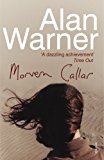 Our tendency as readers is to trust the voice of the narrator, but what happens when the narrator is untrustworthy? Take for example Alan Warner’s Morvern Callar, when we don’t know whether or not she is telling us the truth about anything. Again, if you take this tack, make sure you are prepared for the intended effect.
While identifying with the main character / narrator is a strength of first person POV, it can also be a limitation as the reader is restricted to receiving the story through only one person’s perspective. It is tempting for novice writers to leap from one person’s POV to another to give a fuller picture, however this is considered bad practise. One of the first rules of writing is: stick to one POV. Some writers manage to get around this by attributing sections of a book or alternating chapters to different characters (for example William Faulkner’s The Sound and the Fury) but shifting within a scene or even worse, a paragraph, is a no-no.
Second Person POV
 Second person point of view was very fashionable in the 19th century, when ‘Dear Reader’ was frequently addressed in the text, as if the narrator was just checking to see that they were still listening. Nowadays, it is not used as much in prose because it is considered self-conscious and unnecessarily draws attention to the writer. This is not always the case, however, and the award winning Vernon God Little by DBC Pierre uses second person to good effect (‘when you spot a jackrabbit it automatically spots you back; it’s a fact of nature, in case you didn’t know’), although he does not use second person throughout. It is quite acceptable to shift from first to second person, but not to third. The reason for this is that the character addressing the reader is the same in first and second person so the perspective does not actually change. One of the benefits of second person narration mixed in with first is a more conspiratorial tone. In this voice, as happens in Vernon God Little, the narrator may choose to shock or offend the reader as if daring them to continue reading.
It is difficult (and annoying!) to sustain a second person POV throughout a piece of prose, but is more achievable in poetry. It’s as if the poet is catching the reader’s eye and asking them to share in a moment with them:
‘Are you able to wonder?
Or is it just your indomitable will and pride of the first life …’ (from ‘Baby Tortoise, DH Lawrence)
Third Person POV
This is generally the easiest point of view to write. It has the advantage of flowing naturally and allows the writer to describe how he or she sees a scene as if watching a film. It also allows the writer, to use another film metaphor, to move in and out of close-up and wide shots with ease. The ‘voice’ describing the scene is often called an ‘omniscient narrator’ as they have a God-like view. It is particularly useful in scenes with a number of characters and also in scenes with no characters at all. In third person narration we can see the outside of a farmhouse, the dying crops and starving animals, before we ever meet the farming family. Our knowledge of the character’s physical plight will influence our reaction to them at first sight. This of course can be achieved through first person – accompanying a character as he or she walks towards the farmhouse – but it will be filtered through the individual’s subjectivity.
The danger of third person narration is that the reader may feel alienated from the main character as we don’t know how they feel. This can be solved by using something called ‘third person intimate’ narration which has the advantage of an omniscient narrator while focusing intimately on one character thoughts and feelings.
For example:
‘It so happened that Lucy, who found daily life rather chaotic, entered a more solid world when she opened the piano.’ (From E.M. Forster’s A Room with a View).
How do we know this is third person intimate rather than just third person? Because we are told how Lucy feels. But, unlike first person which would have the same effect, we are not restricted to her perspective alone. Later in the scene we suddenly switch to
‘Mr Beebe, sitting unnoticed in the window (who) pondered over this illogical element in Miss Honeychurch.’
Past, Present and Future Tense
 The POV of a piece of writing relates to who is guiding us through the text. The tense, tells us when the events of the piece happen. Past tense has the advantage of telling after the fact so that we are confident the narrator has full knowledge of what has happened and can reflect on its meaning on our behalf. It is also the easiest to write; third person past tense flows very easily from a writer’s pen. Present tense, like first person, has a sense of immediacy; we experience the events along with the writer. While it may be more intimate, it is less secure, as there is no guide who has been before. This adds tension to the text which can be very effective. Most books or poems are written in either past or present tense, but some mix them up. For example, Leaning Towards Infinity by Sue Woolfe. I have yet to come across a book or story written in future tense (please let me know if you have) but some poetry is written in this form as a musing of things to come. It is not appropriate to mix tenses in sentences or paragraphs but can be done between larger sections of text. When this happens use a double line break to mark a shift in time.
Exercise 10:
Take a piece of creative writing that you have already done; either a poem or a piece of prose (perhaps you could use one of the exercises from our previous sessions). Firstly, identify whether it is in first, second or third person and its tense. Now play around with the POV. How does it change your intended effect? Which POV is best suited to the piece? Why? Now, play around with the tense. What difference does it make if it is in past, present or future?
Next week’s creative writing course topic is bringing your writing to life.
 Welcome to The Crafty Writer's free online creative writing course, presented by Fiona Veitch Smith, a freelance journalist, editor, author, playwright, screenwriter and writing teacher. I hope that you'll see a dramatic improvement in the quality of your writing as you work through this course.
Selecting the most effective POV has always been an issue of mine. I even thought about rewriting my entire story because I didn’t think the way I had been writing it was correct. After reading this, I feel that my current POV is best for the particular story that I’m writing. Thank you for your time and for sharing knowledge that is hard to come by for free nowadays.
God Bless!
You’re welcome.
Your series has been really helpful.
It has givem me insight into many things which I did not even knew were important while writing.
Thanks for all the articles.
You’re most welcome Shobhendra. Glad to be of help.
Pingback: Kate Smith » The Art of Fact
I really love this course.
Wow! First, second and third. Past, present and future. What an amazing change for the reader and for me.
Hi Carolyn. Yes we can easily get in a rut as readers and writers. It’s good to mix things up occasionally. Glad you’re enjoying the course.
Marlowe is not the narrator of “Heart of Darkness.” The narrator is one of the three other quest aboard the Nellie. That is why Conrad puts quotation marks around Marlowe’s dialogue. Big, but common mistake.
You’re right Woosley. Thanks for pointing that out.
I am soooo elated to the knowledge that I just learned. I already knew about point of views, but I needed a refresher on the different ‘tenses’. Thank you so much for your willingness to share!
La Sonia
Any body have more examples of POV with comments ? looking for more views.
Thanks
I think understanding second person narration explains why I found I, Lucifer, a book I otherwise thoroughly enjoyed, fairly annoying by the end. Perhaps second person is best in small doses.
Hi Toni, yeah, I’m not a fan of second person in large doses either.
I’m trying to figure; and look for exsamples of anyone writing a series of books where the first book is written in present first person. And the second is written in past first person. But if you are saying it can happen within one book; I guess it can be believable. Thanks.
Hello from Canada.
I study your thoughts on PoV and have a question.
In my novel, a chapter starts with a report. Then I show the *** break.
Then I go to third person intimate to show what the person reading the report thinks.
It seems to me this preserves continuity even if it breaks such rules as “Change PoV only at chapter breaks.”
Do you think this acceptable?
Grateful for your comments
Michael
HI Michael,
Yes I think that’s fine. I’ve done something similar in a story I’m working on: it begins with a newspaper report then moves to a character’s response to it. The hard break will clearly signpost it. Besides, you haven’t really shifted POV between characters which is the thing that jars with readers.
Good luck with the rest of it
Fiona
Hello, I’ve been following and doing exercises, and they have been really helpful. I have a question regarding switching POVs in a fantasy I am writing. Two people are coming from completely different worlds, and I feel I wouldn’t do justice to their worlds if I limited the POV to only one character. Would you recommend giving each voice one chapter?
Thank you so much for this great course!
Hello Ivana, switching POV between large sections is quite acceptable. YOu just need to make sure you ‘educate’ the reader to know when the switch is taking place. Alternate chapters could get a bit ping-pongish so consider spending a few chapters with each character. As the action hots up and approaches a climax, the gaps between the POV shifts can decrease, but by then the readers will be familiar with the characters and confident to move with you between them. Hope that helps/
Fiona
Hello from Victoria B.C.,
I re-examine my draft for PoV and clarity as to who is talking and try to follow your guidance.
In a narrow-focus scene with girl trying to coax tongue-tied boy to reveal his feelings and boy scared of rebuff, the dialogue has to bring out the almost comedic tension and uncertainty. I try ro do that with attributions and aside but it does not come out well. The more straightforward solution is to TELL NOT SHOW. This is an extract:
Bonnie placed her hand on his. It was not a caress, but it was a gesture she had never before made. “Is there something you want to tell me?” It wasn’t the right question for such a tongue-tied would-be lover as Niall.
“Bonnie, I… Will you…” Niall drew his hand from Bonnie’s. The captain finally got us a warrant, and the guys searched the house but came up empty.” Niall had made a bad start and knew it. The words he had prepared came flooding back. He wanted to touch her with his free hand but lacked the courage. He swallowed. He lent forward. “There’s something else I want to say. I …”
Is this acceptable or will an editor reject it out of hand?
Grateful for your advice
Michael
Hi Michael, this seems problematic to me. You do switch POV mid passage. If I were you I’d stick with one or the other.
I think you may have messed up a bit in the First Person pov section: first-person doesn’t give an immediacy to writing, present tense does.
I think it’s a bit of both, Katerina. Yes present tense gives immediacy in a temporal sense, but first person adds to the sense of being ‘present’ and close to the action. That of course is just my opinion. Thank you for being so gracious in the way you pointed that out
Thank you for your course, I am learning so much.
I am trying to write a short story about the experience of a drunk driver and feel it would have the most dramatic impact as a first person, present tense story. Would this alienate the reader with revulsion or evoke sympathy? Does it matter?
Joseph
Hi Joseph, I think it will work very well. It will establish a connection with us and the driver which ultimately says: this could be you. Go for it.
Fiona
Thank you for your kind response. One more question…when I have completed the story, where can I get constructive feedback without worrying about intellectual theft?
Joseph
Hi Joseph, I give editorial critiques. http://www.thecraftywriter.com/services/#critiquing I am far more interested in writing and publishing my own material than stealing anyone elses
Pingback: Writing is Easy Part 6 « Robert Medak
Hi Fiona, I was searching online for help with my understanding of POV. I enjoyed your post–and learned from it. Wonderful thing you do here. Thank you. Teresa
You’re welcome, Teresa. Glad t was of some help.
Okay this may sound silly but here goes. Writing in third person limited is a really big problem for me. I always seemed to think I’m writing too many she’s and he’s. I mean is that normal? Or is that bad writing? Am I overreacting?
Hi Marylann, the she’s and he’s are unavoidable. If you were writing in first person they would simply be replaced by I’s and we’s. Pronouns are so much a part of the language that they almost become invisible. I’ve just counted the pronouns in a third person intimate passage of my own. In 72 words I mention the character’s name once then use she 7 times – that’s once every 10 words or so. No readers or editors have ever pointed this out as irritating. So yes, perhaps you are just seeing things in your own work. But if it bugs you, stay away from it.
First Person and tense… I’m having a bit of trouble keeping it constant. I’m writing in first person and trying to keep it in the present. Then, I’ll find myself writing “My partner waved me over to his table. I walked over to join him”. But when I change it to “my partner waves me over to his table. I walk over to join him.” sounds… I don’t know… dry and boring? It sounds like I’m just having a guy walking around describing everything he’s doing as he does it. “I pick up my salt shaker. I shake salt on my food. I take a bite”. Is it ok to drift a bit into past tense to give the feel that the character is telling you what just happend a second ago? “I picked up the salt shaker and salted my food. I took a bite”. Is that a no-no of mixing tenses?
Hi Gabriel. I think the only time you can get away with slipping into past tense when writing in present is for the character to announce that they are now going to tell you something that happened before: ‘It was four months ago now when I went into the restaurant and did a little dance with a salt shaker.’ but if it’s something that is almost happening ‘as he speaks’ then you will need to keep it in present tense.