Check out some books by your tutor Fiona Veitch Smith … (click on the book covers to find out more)
 In this fifth session in my free creative writing course, we will be looking at writing characters. In creative writing we become, in a way, like God. In short stories, novels and poems, we construct a world then fill it with people who take on a life of their own. Iris Murdoch described a novel as ‘a fit house for free characters to live in’. How far a literary construct can have free will is an ongoing philosophical debate; more pertinent to writers is whether plot should follow character or the other way around.
Character, Plot and Message
There are three kinds of stories: those that start from character, from plot or from message. If you start thinking about what a story is going to be about before you decide who’s going to be in it, you run the risk of populating your world with 2D puppets who are there simply to serve the plot. I made this mistake in a play once by inventing a character for the sole purpose of serving as a plot device. At the first staged reading, the audience reacted very badly to him. Why? Because he was a ‘type’ rather than a true person with likes and dislikes. When I started to flesh him out a bit, he began resisting the role I was forcing him into. I decided to let him lead me, and the plot developed in a different way from what I’d first envisaged, but it was more true to the character and resulted in a better play. That being said, there are very successful plot-driven novels, particularly thrillers, where the ‘who’ is not as important as the ‘what’. Take for example the John Grisham legal novels where one young, enthusiastic lawyer blends into the next, carried along by a breathtaking storyline.
A message-driven story is one where a writer starts with an idea or theme (enviromentalism, religion, anti-war etc) then crafts a plot and populates it with types who will best illustrate the message. This runs the danger of becoming a sermon. Don’t get me wrong, there’s nothing wrong with ideas, but beware of writing something simply to convert your reader to a cause. I was very disappointed to read State of Fear by Michael Crichton which was no more than a thinly veiled manifesto for the anti-global warming lobby. Compare this to the brilliantly successful Jurassic Park which turned the spotlight on the ethics of zoos, genetic engineering and environmentalism while still honouring the reader’s right to a good story.
 A character-based story is when the characters are so memorable and well-drawn that the story would not exist without them. Think for example of Christopher in The Curious Incident of the Dog in the Night-time, Pi in Life of Pi or Scarlett in Gone with the Wind. The stories surrounding these characters are so much a product of their own personalities that no-one else could fill their shoes. The one danger with character-driven novels is that sometimes they become so introspective that nothing much happens. This is particulary dangerous in 1st person or stream of consciousness texts.
The key of course if to have all three elements in balance. Different writers start from different points and some are more naturally plot-inclined than character or message. There’s nothing wrong with this. But there’s also no reason why you can’t have a great plot, well-drawn characters and still have something useful to say. Simon Morden’s The Lost Art has achieved it (read Simon’s Crafty Writer guest post about getting feedback to improve your work).
Exercise 16:
Think of your own writing. Are you plot, character or message driven? How can you try to bring these elements more into balance?
Starting from Character
That being said, I still think the best way to write is to start with character. Ursula LeGuin says she saw two people walking across a desolate landscape and asked herself: ‘Who are these people? What is their relationship? How did they get there? Where are they going?’; the answers to those questions resulted in the classic Science Fiction novel The Left Hand of Darkness. On a personal level, my children’s book Donovon’s Rainbow emerged after I read in the bible that the second time Noah released a raven and a dove from the ark, the dove came back but the raven didn’t. I asked myself ‘why?’. What happened to the two birds when they were away from the ark? What was their relationship? Were they friends? Enemies?
Exercise 17:
Find some pictures of people. Beautiful people, interesting people, ugly people – it doesn’t matter. Ask yourself who they are. How did they get there? Where are they going next? What is their relationship to one another? How did they first meet? Do they like each other? Do the answers suggest the beginning of a story or a poem? If so, start writing.
Knowing your character from the inside out
Some writers draw up entire dossiers on their characters before they even start to write. They know where they were born, whom they first kissed and how many fillings they have in their teeth. I don’t work like that, but I do believe you need to know more about your character than what appears on the page. If you don’t know who your character is and how he or she might react in a certain situation you will never be able to create believable ’3D’ people. Like all ‘real’ people, your character will have had a past that took place before the book began. The experiences of the past will affect how he or she reacts now.
Exercise 18:
Take one of the characters from Exercise 17 or, if you prefer, a character from something you are already writing, and ask yourself what are their best and worst memories. How do these memories affect them now? What would trigger these memories? A song? A smell? A phrase? An object? Now write a short scene in which a memory is triggered.
As we’ve already discovered in bringing your writing to life, it is always better to show instead of tell. Here is an exercise to help your character show you, rather than tell you, what type of person they are:
Exercise 19:
Ask your character to empty their pockets or their bag onto a table. What comes out? Why does your character have those things with them? Now let your character choose an object and ask them to tell you why it’s important to them. It would be useful to let them speak in first person, that way you can hear their voice.
Motivation
The link between your characters and the plot (what happens to the characters in the course of your story) is motivation. Have you ever read something and thought: ‘they wouldn’t do that; it’s just not believable.’ What you’re noticing is a disparity between the way the author has revealed the character to you and your conclusions about how they should behave. The fault will either be with the characterisation or with the situations the writer has chosen to express that characterisation. In drama the first thing an actor does when getting to know a character is to discover his or her motivation. What makes the character tick? Why do they act a certain way? How would they react in certain situations? What do they want? This last question is the most important. A character who doesn’t want anything, even if it’s just to be left alone, will be useless to a writer. At the start of your story you must determine this central question and allow the plot to develop from there as the character pursues their desire. This is where action follows character. This will be the arc of your story.
Exercise 20:
Take the character you worked on in Exercise 19 and ask yourself what he or she wants. Is this ‘want’ big enough to hang an entire plot off? What might he or she do to achieve their goal?
Conflict
 Conflict is what builds drama in a piece of writing. It stems from the person or thing that stands between your protagonist (the primary character) and their goal. Conflict may be external or internal. In The Silence of the Lambs for example, Clarice wants to find the killer and save his latest victim, but she also wants to prove to herself and everyone else that she’s not just some hick from a country backwater. The conflict comes in terms of time running out for the latest victim, the wiles of the killer and Clarice’s self doubt. Hannibal Lecter provides further conflict because Clarice needs him to find the killer, but, by doing so she risks him exposing her hidden fears and insecurities about her background. In the best sort of drama, which this is, conflict is multi-layered.
Exercise 21:
Now that you’ve determined what your character wants, ask yourself what stands in his or her way. Try to unearth multiple layers of conflict through other characters (easily achieved by giving your protagonist and antagonist opposing goals), external situations outside of their control (a fire, a storm, a traffic jam etc) and an inner conflict stemming from what you discovered about their fears in Exercise 18.
Wow, you’ve got more than enough now to create a well-rounded, conflicted character who can propel a plot forwards. So what are you waiting for? Get writing!
Next week’s creative writing course topic is all about writing dialogue. See you then.
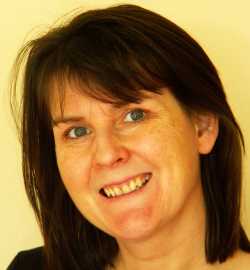 Welcome to The Crafty Writer's free online creative writing course, presented by Fiona Veitch Smith, a freelance journalist, editor, author, playwright, screenwriter and writing teacher. I hope that you'll see a dramatic improvement in the quality of your writing as you work through this course.
<p>I’ve just found this excellent blog on fiction writing. For more on bringing your characters to life visit http://kayedacus.com/2007/06/20/creating-credible-characters-mannerisms-and-quirks/ And while you’re there, browse around the excellent site. Look particularly at http://kayedacus.com/2007/06/21/creating-credible-characters-what-do-you-want/ for more on character motivation. </p>
<p>Fiona</p>
Hi Fiona,
With my short stories I tend to think of the plot first – I usually find it hard to create characters. What you’ve said here about characters and motivation is very helpful.
I can’t do the exercises today as I have only one and a half days to make an Egyptian outfit for school! But next week I’m starting a new story, so I’ll go through this section on characterisation again. I’ll think about exercise 2 when I’m on the bus tomorrow – and I’ll try not to stare too much at people!
Rebecca
Now you’ve got me thinking, Rebecca. What kind of character would make an Egyptian outfit for school? What might her motivation be? What might stop her from making it and how will she react if it happens? Juicy stuff! Good luck with the outfit.
Good resources here. A must-read from now on. You accept reciprocal link-ups? Please drop me a comment on my latest fiction (my first attempt at horror). Thanks a lot!
I’ve been thinking about plot and character in terms of my grandmother’s memoir (which I am currently revising/rewriting). In some ways the book is plot driven — and it’s a good story, lots of drama and well-connected to themes that readers will find meaningful. But I keep wanting to make character a bigger part. Problem is that it’s not MY life. I am writing Grandma’s life, and though I knew her very well in her later years, I did not know her when she was a teen. I did not know her parents. Etcetera.
And since I am not writing fiction, it’s not possible for me to make things up. . . . Maybe imagine what an event was like that I DO know happened, but that’s not the same as being able to fabricate.
Anyway, thanks for the post on character and plot. I’ll have to think more about what you’ve said.
Hi Writing GB,
You should probably drop by at my post on non-fiction autobiography. I look at family history there, though not strictly memoir.
http://www.thecraftywriter.com/2007/10/26/non-fiction-writing-autobiography-and-writing-from-life/
Similar principles though. You’ve got a real life ‘character’ and you still have to tell a story. I’ve made some recommendations for some useful books that might help you. Grandmas are amazing gifts to us. Mine died last year, a week before her 101st birthday. And what a life she had!
Forgot to say, GB, that you might consider fictionalising some parts of her life that you’re not aware of. You could be very up front about it, and say something along the lines of: I always wanted to know what happened to Grandma during these years, but I never did. But I could always imagine, and this is what might have happened … As long as you are true to the character of your grandma as you know it, it might be quite a clever device. Make sure of course that the readers know this is your imagined bit rather than actual facts. Sue Woolfe in Leaning Towards Infinity did something like that. OK, it’s all fiction, but it’s written as a memoir of a granddaughter writing her mother’s and grandma’s stories and ‘filling in’ the bits she’s unsure of.
Hi Fiona,
This weeks session really made me think hard about my novel in progress.
Initially I had a vague idea that the appearance of unknown siblings might cause a lot of friction and could even result in murder.
I started then to think about the characters and have found that the starting idea has all but vanished from the storyline.
I have worked through the exercises but I am still thinking about the questions this session raised for me.
Thanks Fiona
Hi Sue, that happened to me in a play once. The original concept (the image of a quilt) ended up being a peripheral element rather than the central focus. In fact, the play could have got along quite happily without it! That was a result of allowing characters a bit of free reign too. Good luck with the novel.
I?d prefer reading in my native language, because my knowledge of your languange is no so well. But it was interesting! Look for some my links:
This is the best but hardest lesson for me. I could go on forever about a character but then it seems like I end up telling the story while I am creating a character, and I tend to make each character too important as I am working on their description they become a main person. Thanks for the help!
I have learned a lot from the lesson on characterisation. I hsve written an unpublished novel called “99 Red Balloons” and I feel I was lacking in narrative and too heavy on characterisation and I think that I am too muchof a beginner to write in that style. I’m going to keep it and perhaps in the futurwe when I become more experience I can re-direct the material.I think that I ill practice on short stories.
It’s always good to know your strengths and weaknesses and to have a realistic view of your writing. However, don’t give up on the idea of writing a novel completely. As you say, short stories are an excellent place to practice. Good luck and keep on writing.
Pingback: The Mad Editor’s Round-Up #12 | Diary of a Mad Editor
Pingback: Just Write Blog Carnival: October 9, 2009 Edition | Incurable Disease of Writing
Are there writers who make up plot as they go along, perhaps with the very barest of outlines? I find that to await a plot often means that I never really get going. Moreover, I write fairly slowly. Is there merit in pushing yourself to write faster?
Trevor
We all have to find our natural rhythm, Trevor. As long as you’re happy with the end product, how you get there is up to you. Some writers do make up the plot as they go along but most of them have at least an idea of the basic shape of the story before they start and then fill in the details as they go along. The merit of writing more quickly is that you can meet deadlines. If you want to experiment with this why not try something like Nanowrimo http://www.nanowrimo.org/ I’ve never done it because it’s simply too fast for me and my busy work / parenting schedule doesn’t allow for it – but it may help you. One draw back of writing too slowly is that it can be disheartening when you see no apparent progress. But if it doesn’t bother you, why change it?
Thank you Fiona, for your kind response. It is much appreciated.I’m more of a ‘message’ writer, but not in the hard-sell, narrow, proselytising way at all. More in the sense of something going on underneath the story or plot. It is this underneath, almost philosophical part that comes to me first, and then I ‘hang’ things around it.But the ‘message’ is more of an open-ended thing, for readers to decide.In any case, I rather fancy stories with two levels; viz. an explicit plot, with soemthing beneath as well.
Thanks again.
Trevor.
I think i am plot and charatcers writer. I mean, i spend a lot of time on characters, but i need to work even on plot, or i risk to tell useless things.
Messages is in last place. And really i can’t at all fit my stories with a message that i don’t fell (example i can’t write a communist story if i’m anti-communist, and i tried to think a story like that)
So i have decided to send messages about things i believe, not forcing messages that don’t fit with my ideas.
Wow…I feel really connected with the character I created. It’s amazing how it all started with finding a random picture of someone and working through these exercises to create an entire story about them.
This has been the most interesting lesson following How to write a short story.I found myself deeply obsessed with characterisation while losing sight of the need to use those characters to serve the overal plot of the story.I also have a weakness in making these characters appear as real as I would like them to appear.Otherwise,this has been a wonderful lesson to me and hope many more would find this lesson particularly informative,interesting and entertaining.I think by following these lesson with the creative enthusiasm inside me,I will be able to transform into one of the greatest creative writers in Africa.Thank you once again for your wonderful lessons.